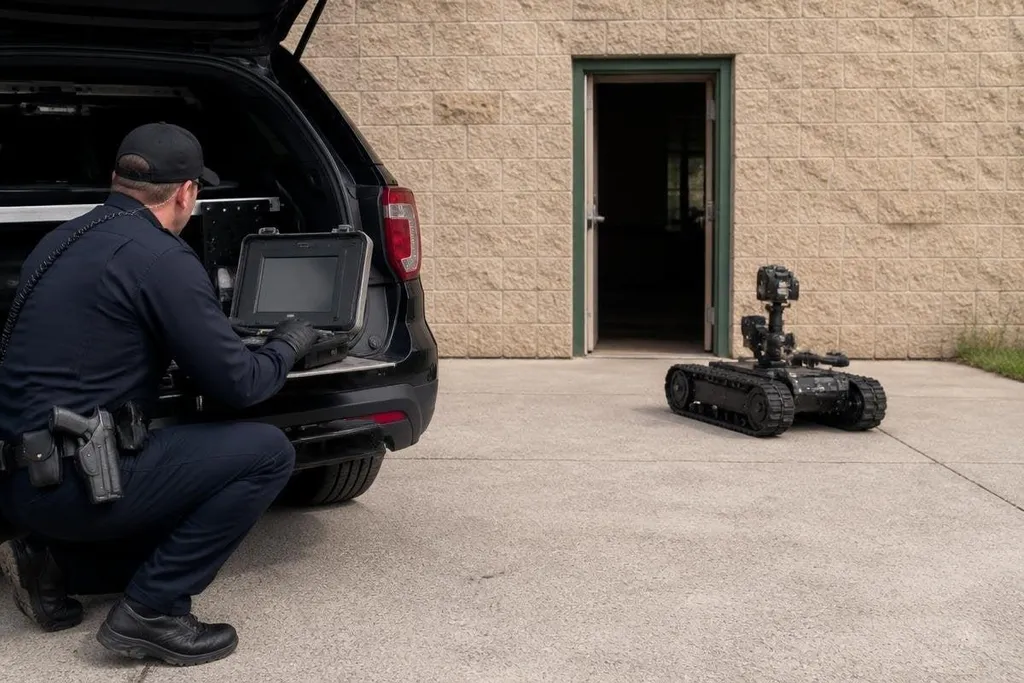
A police robot can enter a building, send back video, and carry a radio without putting an officer in the doorway. That basic trade has made remote machines useful for bomb calls, armed standoffs, and places where smoke or chemicals may hurt people.
- Robots keep officers farther from unknown hazards.
- Cameras and microphones give teams a view before they enter.
- Remote control still limits what the machine can do.
The main job is distance
Police robots are mobile sensor platforms. A team drives one from a safe position while its camera sends live video to the operator. Some models also carry lights, speakers, microphones, thermal cameras, or a small arm.
That changes the first few minutes of a call. Officers can check a room, speak to someone behind a door, or look for a dangerous object before sending a person inside. The robot may not solve the incident, but it can answer a basic question: is there a safe route forward?
The machine's shape matters. A tracked robot can cross rough ground and climb some steps, while a wheeled model may move faster on a flat floor. A small robot can fit under a vehicle or through a narrow opening, but it may carry fewer sensors and lose contact more easily.
Robots take on the jobs people avoid
Bomb disposal is the clearest use. A robot can carry a camera close to a suspected device, move an object, or place equipment near it while the bomb squad stays back. The exact task depends on the robot's arm, payload, reach, and control system.
Police teams also send robots into damaged buildings, hostage calls, and incidents involving possible chemical hazards. In each case, the machine buys information before a person takes the next risk. That value comes from the camera feed and the distance, not from the robot acting on its own.
Some systems include two-way audio. An officer can speak through the robot's speaker while watching the scene through its camera. This may matter during a standoff, though the robot's noise, size, and movement can also affect how a person responds.
A police robot’s value depends on what the operator can see, hear, and control during a live call. Police robotics reporting from Robot24.com can connect those controls to the robot’s camera, audio link, response time, and the officer’s actions before the next section examines the operator’s limits.
The operator remains the weak point
Most police robots are remotely controlled. The operator must drive, watch the video, manage the radio link, avoid obstacles, and decide where the camera should look.
A narrow field of view can hide a person standing beside the robot, while smoke, darkness, walls, or distance can weaken the video feed.
Battery life also sets a hard limit. The robot may need enough charge to travel to the scene, inspect it, return, and remain ready for a second task. A machine that stops after a short search can leave officers with less information than expected.
Training takes time too. Driving across a clear floor is easy. Driving around furniture, loose cables, stairs, and people while controlling an arm is a different job. Police departments need practice plans, spare batteries, repair support, and rules for recording and storing video.
Privacy adds another question. A camera sent into a home or public space can collect faces, voices, and room details. Departments need clear rules for when a robot may record, who can view the footage, and how long the files remain stored.
What to check before buying one
A department comparing police robots should ask these questions before looking at a purchase price:
- Scene fit: Can it cross the floors, steps, doorways, and outdoor ground found in local calls?
- Sensor view: Does the camera show enough of the area, and can the operator see in darkness or smoke?
- Control link: What distance and barriers can the radio system handle before video or control drops?
- Working time: How long can the robot search, wait, and return on one battery?
- Repair plan: Can the department get parts, software fixes, training, and service after delivery?
- Data rules: Who controls the recordings, and what policy covers public access and deletion?
I think police robots earn their place when they keep people away from a known hazard and give officers better information. They make less sense when a department buys one for occasional demonstrations without a trained team, repair budget, and clear recording policy.
The next test is not a polished demonstration. It is whether a department can operate the robot on a real call, keep the video link stable, and return the machine to service before the next shift.