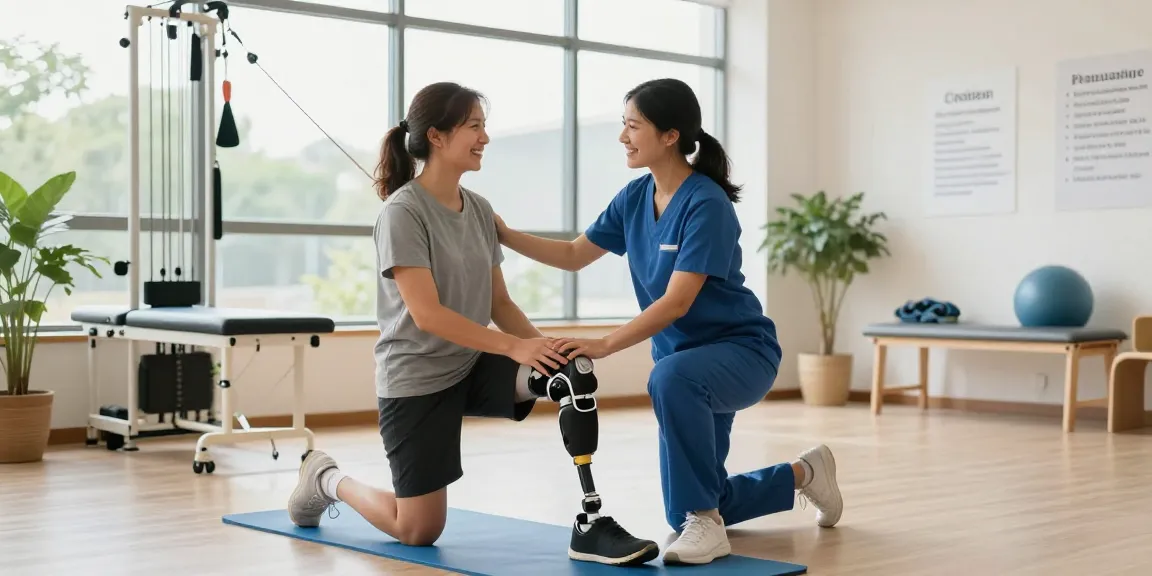
Understanding K-Levels in Rehabilitation
K-levels play a pivotal role in the rehabilitation journey of individuals with limb loss, guiding the selection of appropriate prosthetics and influencing mobility outcomes. Understanding these levels can significantly impact a person's quality of life, as they directly correlate to functional mobility and independence. For those exploring options, login DRAGON222 provides comprehensive insights into this essential aspect of rehabilitation.
What are K-Levels?
K-levels, or Kinematic Levels, are a standardized classification system used to assess the mobility potential of individuals who have undergone lower limb amputation. This system ranges from K0 to K4, with each level representing a criterion for how much ambulation the individual is capable of achieving with a prosthetic limb. Specifically:
- K0: No ability to ambulate or transfer safely.
- K1: Limited ambulation in household settings, typically on level surfaces.
- K2: Ability to ambulate in the community, including curbs and uneven surfaces.
- K3: Ability to ambulate with variable cadence, engaging in community activities.
- K4: High-level ambulator, often exceeding basic mobility needs.
The Importance of Accurate K-Level Assessment
An accurate K-level assessment is crucial for several reasons. It not only determines the type of prosthetic device that will best serve the individual but it also sets realistic expectations for therapy and rehabilitation. Misclassification can lead to mismatched prosthetic technology and inadequate support, which can hinder recovery and overall satisfaction with mobility.
How K-Levels Affect Prosthetic Choices
The choice of prosthetic device is fundamentally linked to the K-level assigned during assessment. For instance, someone classified at K1 may be fitted with a basic prosthetic that facilitates walking on flat surfaces, while a K3 or K4 individual would require a more advanced, dynamic prostheses that allows for activities like running or engaging in sports. Thus, K-levels are both a diagnostic tool and a guideline for rehabilitation pathways.
Challenges in Achieving Desired K-Levels
Common Misconceptions about K-Levels
Misunderstandings about K-levels often result in misinformed decisions. A prevalent misconception is that higher K-levels imply a lack of motivation or effort in rehabilitation. In reality, numerous factors—such as pre-existing conditions, psychological barriers, and physical limitations—can influence K-level outcomes. Recognizing these variables is essential for fostering a supportive rehabilitation environment.
Barriers to Mobility and Functionality
Individuals may face various barriers that impede their ability to attain their desired K-level. Physical challenges can include muscle weakness, residual limb pain, and co-morbid medical conditions, while psychological factors may involve anxiety, depression, or lack of motivation. These barriers can create a feedback loop that negatively affects a person's confidence in their mobility potential.
Strategies to Overcome Rehabilitation Obstacles
To enhance mobility and facilitate the attainment of higher K-levels, individuals and healthcare providers can implement several strategies:
- Setting realistic goals: Establishing achievable short-term objectives can reignite motivation and build confidence.
- Tailored therapy programs: Customizing rehabilitation plans to meet the unique needs of the individual can optimize physical gains.
- Support networks: Building a network of peers, family, and professionals can provide emotional support and encouragement.
Best Practices for Navigating the K-Level System
Preparing for K-Level Evaluations
Preparation for a K-level evaluation involves understanding the assessment process and being ready to effectively communicate mobility expectations. Individuals should consider keeping a detailed log of their daily activities, as this information can provide valuable insights during assessments.
Building a Comprehensive Rehabilitation Plan
A robust rehabilitation plan should encompass various components, including physical therapy, occupational therapy, and psychological support. Incorporating these elements ensures that both physical and emotional needs are addressed, fostering a holistic recovery approach.
Collaboration with Healthcare Professionals
Effective communication with healthcare professionals is vital. Regular consultations with physicians, prosthetists, and therapists allow for adjustments to the rehabilitation plan based on progress, challenges, and changes in health status. Collaboration enhances the chances of achieving the desired K-level more efficiently.
Real-World Success Stories
Case Studies of Effective K-Level Management
Examining case studies of individuals who have successfully navigated the K-level system can offer valuable insights. For example, one case involved a K2 amputee who, through personalized rehabilitation and a community support program, progressed to a K3 level, allowing him to participate in recreational sports.
Testimonials from Patients and Caregivers
Listening to testimonials from individuals and caregivers who have experienced the K-level system firsthand can provide inspiration and encouragement. Many share stories of overcoming challenges and achieving significant milestones, emphasizing the importance of persistence and the right support.
Lessons Learned from Rehabilitation Journeys
Every rehabilitation journey is unique and filled with lessons that highlight the resilience of the human spirit. The most common takeaway among successful individuals is the need for patience and adaptability in the face of setbacks. These lessons inform future practices and inspire others to continue striving for their K-level goals.
Future Trends in Rehabilitation and K-Levels
Technological Advancements in Prosthetics and Therapy
The future of rehabilitation is promising, driven significantly by technological advancements in prosthetics and therapy. Innovations such as biomechanical sensors and 3D-printed prosthetics will offer increased customization and functionality for individuals across all K-levels.
Emerging Research on K-Levels and Mobility
Current research into K-levels is expanding our understanding of mobility and rehabilitation. Studies examining the psychological impacts of limb loss and their correlation with K-level achievement are paving the way for more effective therapeutic interventions.
The Role of Teletherapy and Remote Support
The rise of teletherapy presents a unique opportunity for individuals to access support remotely. This innovation can increase the frequency of therapy sessions and provide continuous encouragement, thereby helping patients remain engaged in their rehabilitation journey, particularly in geographic areas with limited access to services.
What are K-Levels and how do they impact mobility?
K-levels are essential markers that define an individual's potential for mobility post-amputation. They directly influence the type of prosthetics recommended, thereby impacting daily life activities and overall independence.
How can I prepare for a K-Level assessment?
Preparation can include maintaining a detailed record of your mobility activities and being open and honest with your healthcare provider about your abilities and goals.
What challenges do individuals face in rehabilitation?
Challenges can range from physical limitations to emotional hurdles, thereby requiring a multifaceted approach to rehabilitation that addresses both body and mind.
What are some success stories related to K-Level adjustments?
Success stories often highlight individuals who have transitioned from lower to higher K-levels through personalized rehabilitation and support, showcasing the importance of tailored approaches.
How will technology change K-Level assessments in the future?
Technological advancements are expected to streamline K-level assessments, providing more accurate evaluations through data-driven insights and enhanced prosthetic designs that cater to dynamic mobility needs.